Best Practices
Integrate AI Code Review into Your Development Workflow
Dec 6, 2025
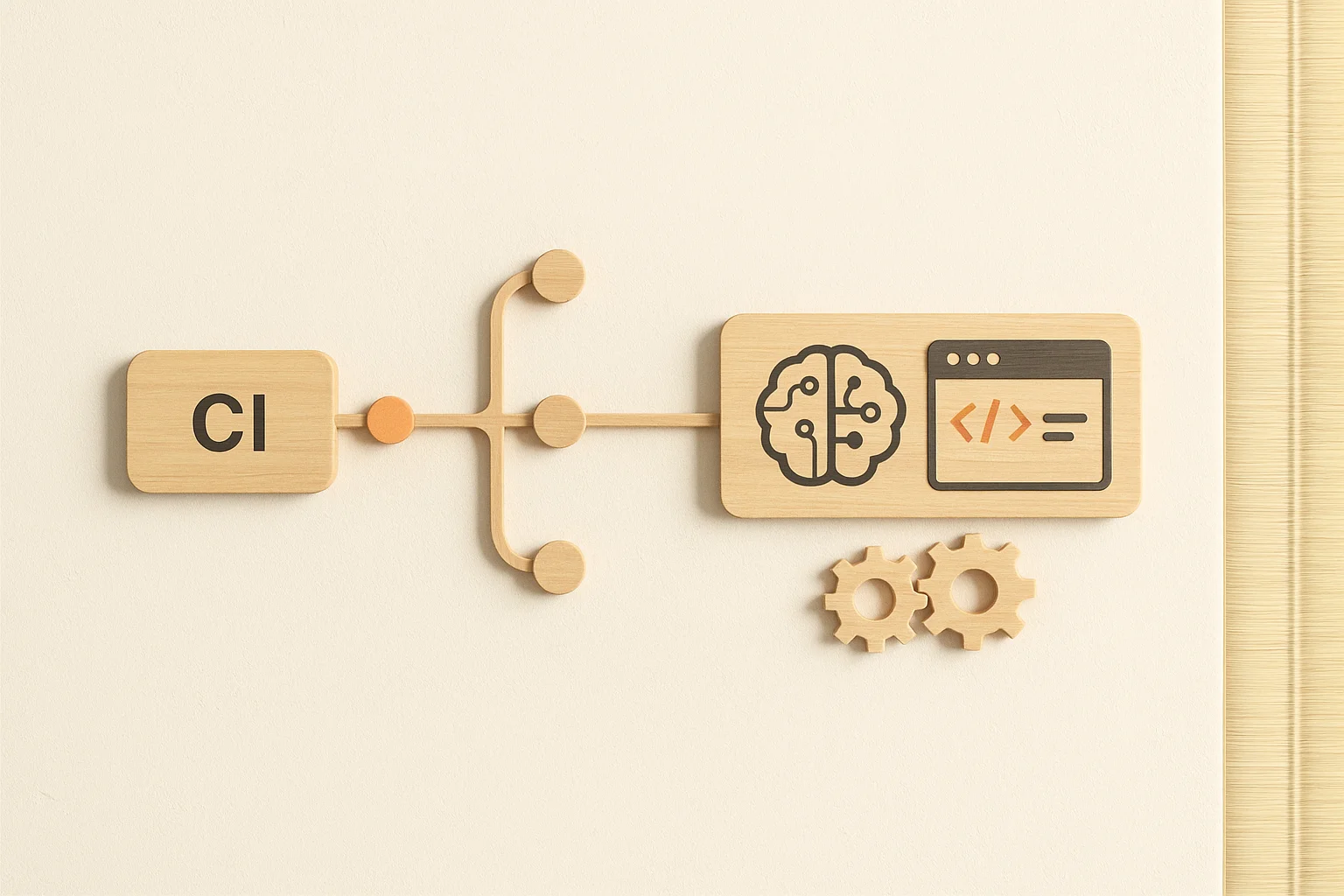
Integrating AI code review is a rollout problem, not just a model choice. Propel gives you the CI hooks, routing, dashboards, and governance so you can drop AI review into your workflow without slowing delivery or wiring up your own prompt ops stack.
TL;DR integration steps
Start with one repo and a narrow scope (tests and security) using Propel defaults.
Embed AI review in CI so every PR gets a deterministic, reproducible pass.
Route by risk using path rules and Code Owners; keep docs and trivial diffs light.
Wire AI findings into sprint rituals and incident reviews to close the loop.
Log prompts, model versions, and approvals automatically for compliance.
Quick start template
- Pick a pilot repo with active reviewers and clear Code Owners.
Enable AI review in CI, feed static scan output, and gate only medium or higher risk.
Run a two-week pilot, publish precision and false positives, then expand.
- Document a runbook for outages and bad suggestions.
- Roll into sprint rituals and retros with clear success metrics.
1) Align on scope and success metrics
Decide which findings matter: missing tests, security regressions, risky data flows, performance regressions, and migration pitfalls. In Propel, set these as routing and severity rules and track acceptance, false positives, time to first review, and escaped defects automatically.
2) Wire AI into CI and SCM
Add a CI job that triggers AI review after unit tests and static scans. Propel ingests scan output and repository metadata so the AI prioritizes the right issues. Use status checks to block merges only for high-risk findings; let low-risk suggestions post as comments without blocking.
3) Create a rollout playbook
- Pilot with one squad and one repo on Propel.
Set a weekly review of acceptance rates and false positives in the dashboard.
- Expand to more repos only after three consecutive green eval runs.
- Update onboarding docs and record a short demo for new engineers.
4) Design the feedback loop
Give developers a fast accept and dismiss flow. Propel captures dismiss reasons (false positive, duplicate lint, missing context) and feeds them into prompt ops and routing. Weekly digests keep developers engaged.
5) Add governance and auditability
Store prompts and routing logic in version control with approvals. Propel logs which model and prompt version reviewed each PR and keeps data handling policies documented. For regulated teams, export review logs so auditors can trace why a change was approved.
Propel includes deterministic diffing, prompt versioning, and audit trails out of the box, so compliance reviews stay simple.
6) Fit AI review into sprint rituals
- Standups: call out AI-flagged risks and assign owners.
Backlog grooming: turn recurring AI findings into stories or lint rules.
Retros: review precision metrics, dismiss reasons, and routing tweaks.
Incident reviews: check whether AI flagged the issue pre-merge and update rules.
7) Handle edge cases and outages
Document how to proceed if AI is unavailable or wrong. Propel provides a bypass label, a rollback to the previous prompt version, and a human approval path. Keep an on-call rotation for the AI reviewer so ownership is clear.
FAQ
Where should AI review run in the pipeline?
After fast tests and static scans so it has the latest signals, but before long integration suites. That keeps latency low while preserving context.
How do we keep developers from feeling slowed down?
Avoid blocking on low-risk findings, keep first comments under 30 seconds, and show the precision metrics weekly. Fast feedback plus visible quality gains builds support.
What if we work in multiple languages?
Start with the top two languages by volume. Add language-specific prompts and routing rules. Propel lets you pin model choices per repository to keep output consistent.
Next

Best Practices
AI Agent Inventory: What to Track and How to Build One
Build an AI agent inventory that records ownership, access, cost, outcomes, and lifecycle state so your organization can govern agents securely as they scale.
Comparison
LM Arena Coding Leaderboard: Insights for Developers
A current May 2026 snapshot of the LM Arena Code Arena leaderboard, what changed, and how engineering teams should turn rankings into safer model routing.

Best Practices
AI-Resistant Technical Evaluations: How to Review Engineers in the Coding-Agent Era
Technical interviews and take-homes need to change now that coding agents can beat legacy exercises. Use this playbook to evaluate steering, verification, and judgment instead of pretending AI is absent.