AI Models
AI and LLM Breakthroughs in 2026: What Actually Changed
Mar 9, 2026
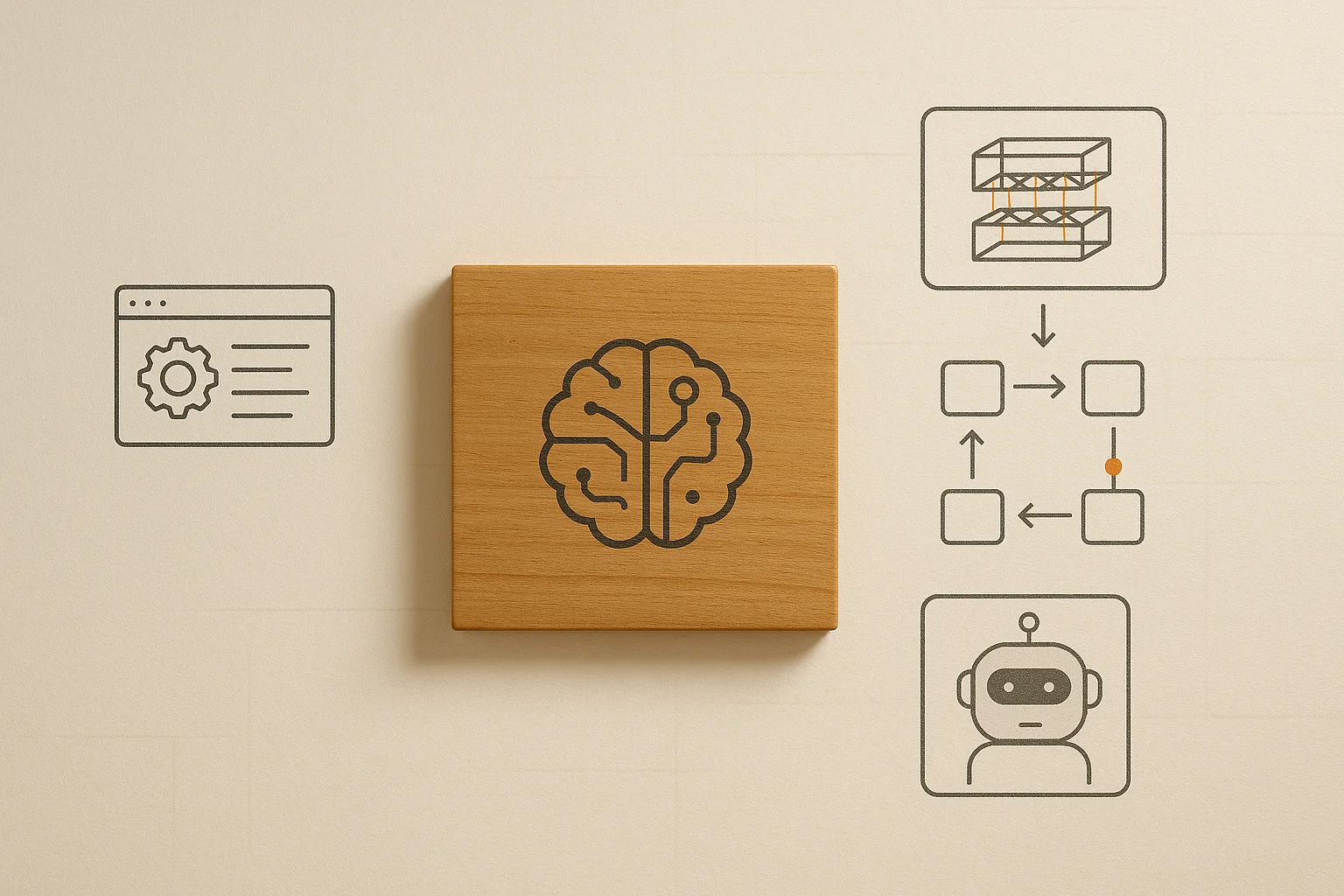
Every few months the AI market announces another breakthrough. In 2026, that word means something different. The biggest gains are no longer only about one benchmark jump or one larger context window. They are showing up in the stack around the model: agent products, hybrid architectures, cheaper inference, tighter runtime controls, and evaluation loops that make model behavior usable in real workflows.
Key Takeaways
AI breakthroughs now come from the whole stack, not just one model checkpoint.
Stronger models matter, but productized agents are changing workflows faster.
Hybrid architectures and compute efficiency are becoming strategic differentiators.
Runtime safety, provenance, and evaluation are now part of the breakthrough story.
Teams should judge progress by task completion, cost, and reviewability.
TL;DR
The most important AI and LLM breakthroughs in 2026 are not just smarter models. The real shift is that models are arriving with agent loops, cheaper serving, new architectures, and runtime controls that make them usable in production. The breakout question is no longer “how high did the benchmark score go?” It is “can this system do useful work repeatedly, at acceptable cost, under constraints we can trust?”
Why this topic is breaking out now
Between March 4 and March 9, 2026, several of the most useful engineering and AI feeds pointed at the same shift. Models are still improving, but the bigger change is that the surrounding system is maturing fast enough to turn model quality into reliable output.
The common thread is that the frontier is no longer just “who trained the best model.” It is “who built the most useful, economical, and governable system around the model.”
A breakthrough is now a stack, not a score
For most of the past two years, AI coverage treated breakthroughs as isolated model events. One lab released a larger model, another published a stronger benchmark, and the rest of the market reacted. That lens still matters, but it misses how products are actually being adopted. A model that is marginally better in a chart but expensive, opaque, and hard to supervise often loses to a system that is slightly less flashy but much easier to run at scale.
| Old breakthrough lens | New breakthrough lens | Why it matters |
|---|---|---|
| One benchmark jump | Reliable task completion under constraints | Buyers care about repeated outcomes, not screenshots |
| Larger context window | Better tool use, memory, and planning | Useful work depends on execution loops, not only token count |
| One new flagship model | Integrated product, infra, and eval stack | The full system determines shipping speed and cost |
| Safety policy in a PDF | Runtime approvals, sandboxes, and provenance | Trust increasingly depends on what the system can prove |
Breakthrough 1: stronger models are finally crossing the usefulness threshold
Raw model quality is still moving. The difference is that improvement is becoming broad enough to matter across multiple categories of work at once: coding, knowledge work, and structured tool use. That is more important than another narrow leaderboard win. Once a model can carry more of the workflow without constant rescue prompts, whole product surfaces can be rebuilt around it.
Breakthrough 2: agent loops are becoming products, not demos
This is arguably the biggest visible shift. Last year, most teams experimented with chat interfaces and short-lived copilots. This year, the dominant pattern is long-running agents that plan, execute, retry, and verify. That is why products like Cursor Automations and Claude Code matter. They are signals that the market is moving from model access to managed execution.
For software teams, that changes the operational surface completely. A useful agent product needs memory between runs, scope control, tool contracts, and a review path when the output affects production systems.
Breakthrough 3: architecture and compute are back in the spotlight
It is easy to think the era of architectural novelty ended once scaling laws dominated the conversation. That is not what the current signal set suggests. Hybrid designs, post-training strategy, and inference economics all shape what products can ship by default. Compute is not a background detail anymore. It is a feature.
Breakthrough 4: the trust layer is being built in public
Safety used to be discussed mostly as policy language. The practical frontier now looks more operational. Teams are building runtime sandboxes, approval gates, provenance trails, and explicit testing loops because the central question has changed from “can the model do this?” to “can we let the system do this without losing control?”
How to tell if something is a real AI breakthrough
New launches are noisy. A more useful filter is to ask whether the claimed breakthrough improves one of five practical dimensions:
- Can it complete materially more work without hand-holding?
- Does it lower cost or latency enough to change default usage?
- Does it integrate into tools and workflows, not just a demo UI?
- Can the behavior be evaluated, supervised, and rolled back?
- Does it improve the quality of human handoff, review, or approval?
What this means for engineering leaders
The best response to rapid AI progress is not to chase every launch. It is to update your operating model. Treat model selection, tool contracts, runtime permissions, and review flows as one system. If any layer is weak, the stack looks smarter in demos than it does in production.
Choose models with workload-specific evaluations, not only public rankings.
- Prefer products that make execution observable and reversible.
Design clear escalation points where humans approve high-risk actions.
- Measure throughput, defect rate, and cost together, not in isolation.
- Assume the winning stack will be multi-model and policy-aware.
FAQ
Are larger models still the main driver of AI progress?
Larger and better-trained models still matter, but they are no longer the whole story. The most meaningful gains now come from how model quality combines with tooling, orchestration, architecture, and runtime controls.
What is the most underappreciated breakthrough right now?
Managed execution. Once agents can run on schedules, preserve state, call tools, and hand off work with evidence, they stop feeling like assistants and start feeling like new software primitives.
How should teams respond to rapid AI launch cycles?
Build a repeatable evaluation and rollout process. If you can compare models, inspect agent behavior, and review AI-generated changes with evidence, you can benefit from fast-moving breakthroughs without turning your engineering workflow into guesswork.
Related Reading
reading model rank spread correctly
AI pull request automation guide
coding agent guardrails playbook
- model diversity
evidence-first AI code review
session provenance
post-benchmark eval loops
Sources and Further Reading
Next

Best Practices
AI Agent Inventory: What to Track and How to Build One
Build an AI agent inventory that records ownership, access, cost, outcomes, and lifecycle state so your organization can govern agents securely as they scale.
Comparison
LM Arena Coding Leaderboard: Insights for Developers
A current May 2026 snapshot of the LM Arena Code Arena leaderboard, what changed, and how engineering teams should turn rankings into safer model routing.
Best Practices
AI-Resistant Technical Evaluations: How to Review Engineers in the Coding-Agent Era
Technical interviews and take-homes need to change now that coding agents can beat legacy exercises. Use this playbook to evaluate steering, verification, and judgment instead of pretending AI is absent.